Saab
A Man Called OveSaab is more than a car marque in Ove’s life: its models accompany changes in his household, while its corporate history becomes a matter of principle and a recurring point of conflict with Rune. Through Ove’s attachment to Saab, the cars become practical tools and emblems of a personal code that resists a changing world.
Identity and Corporate Change
Saab enters the story not only as a maker of cars but also through its merger with Scania. At a meal with Sonja’s father, Ove identifies a truck as an L10 and remarks that Saab is making them now. Her father, who has driven Scania trucks for years, sharply insists on the Scania name. For him, the merger does not erase the marque he has remained loyal to; it is a betrayal he never quite forgives. Ove, by contrast, has become interested in Scania since the merger, and asks whether the truck runs well. Their exchange turns corporate ownership into a personal disagreement about what a vehicle is and what it ought to be called.
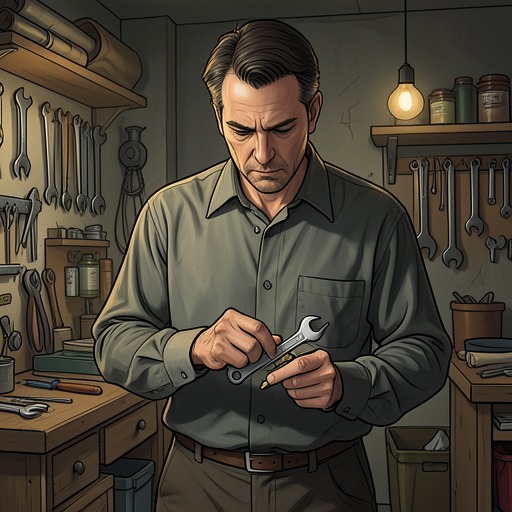
The same attachment is tested on a larger scale when General Motors acquires the last Swedish-held shares in Saab. Ove reads the news, closes the newspaper, and swears for much of the day. Sonja disputes his precise account of the company’s nationality, but the disagreement does not change his decision. He will not buy another car; he will drive his blue Saab 9-5 station wagon until either the car or he breaks down. To Ove, newer vehicles have become too electronic, more like computers than machines that can be taken apart and repaired. His refusal is therefore both a response to a corporate change and a defense of the hands-on understanding of cars that helps define him.
Cars in Ove’s Household
Ove’s choices of Saab models follow the practical demands of family life. When Sonja tells him they need a house in which their child can grow up, he considers her pregnancy and concludes that they will need a Saab station wagon. His response translates a major change in their lives into a familiar question of what kind of car will serve them.
After the accident that leaves Sonja using a wheelchair, Ove replaces his Saab 96 with a Saab 95 to make room for it. When she later gets a more modern wheelchair, he moves to a Saab 900 hatchback. These purchases mark changes in their circumstances without separating the cars from everyday care: the model has to fit the person and the needs of the household. Later, Ove buys two more Saab 900s and then his first Saab 9000. Eventually he acquires another Saab 9000 and a Saab 9000i, before settling on the blue Saab 9-5 that he keeps for thirteen years.
The sequence is not simply a list of upgrades. Ove’s car decisions track a shared life with Sonja, from planning for a child to accommodating her wheelchair, while his chosen marque remains constant. The cars are valuable to him partly because they are usable: their purpose is to carry people and meet concrete needs, not to display novelty.
Saab and the Rivalry with Rune
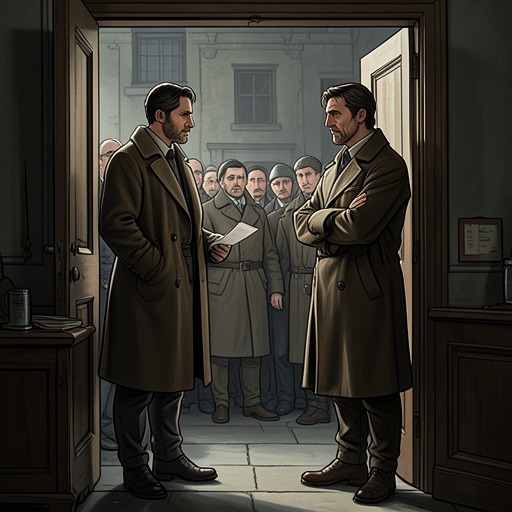
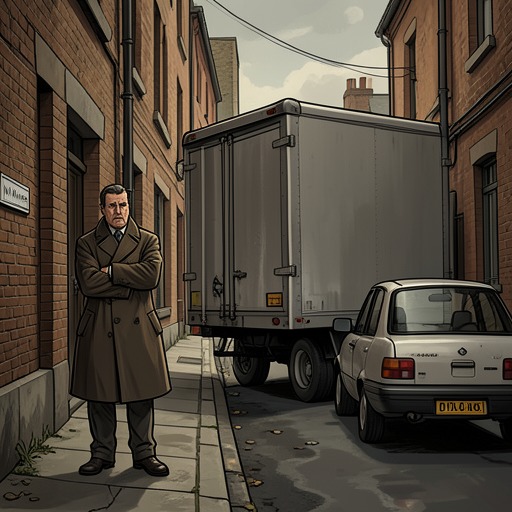
Saab also supplies the recurring terms of Ove and Rune’s rivalry. When the two couples move into the row houses, Ove drives a Saab 96 and Rune a Volvo 244. Their successive purchases sustain a contest played out through model numbers: Ove gets a Saab 95 as Rune buys a Volvo 245; Ove later moves to a Saab 900 while Rune chooses a Volvo 265. Ove goes on to buy two more Saab 900s and a Saab 9000. Rune, after another Volvo 265, buys a Volvo 745 station wagon, then changes to a Volvo 740 sedan. The vehicles register changes in both households, including Ove’s need to accommodate Sonja’s wheelchair and Rune’s hope for another child with Anita.
The escalation makes the men’s antagonism legible to Sonja. She explains it to curious neighbors through the cars, while acknowledging that the models may not fully explain why the former friends came to loathe each other. The rivalry is recognizable to those who understand it and difficult to clarify to those who do not. In her account, the cars provide its visible pattern, not necessarily its whole cause.
The contest reaches its sharpest turn when Ove goes to a dealer to look at the newly launched Saab 9-3. He returns home to learn that Rune has bought a BMW. Ove reacts with disbelief at Rune’s departure from Volvo, treating it as a breach of the logic by which he has understood their rivalry. The Saab-versus-Volvo pattern depends on each man continuing to choose his side; Rune’s switch disrupts that order. The cars’ importance lies as much in this shared, repeated system of allegiance as in their mechanical uses.
Loyalty, Use, and Legacy
Across these episodes, Saab carries a tension between constancy and change. Ove accepts successive models when life requires them, and his choices adapt to a growing family and Sonja’s mobility needs. But when he sees Saab’s ownership and the character of its cars changing, he draws a line: the blue station wagon will be his last. His loyalty is not simply to the newest product or the company’s name; it is bound to the practical qualities he believes a proper car should have and to a history of choosing Saab.
The narrative repeatedly makes cars consequential through ordinary decisions: what will fit a wheelchair, what will suit a household, which marque a neighbor chooses, and whether a vehicle can still be repaired by its owner. Saab links those decisions to Ove’s sense of function and order. Sonja once suggests that his car may break down with sorrow when he is buried. The thought leaves the old Saab neither a mere possession nor an independent substitute for him: it is the durable companion of a life organized around usefulness, habit, and loyalty.